
Craziest Restoration Yet: The 1885 Schimmel & Nelson Utah Heirloom Verti-Grand Upright Piano
Brigham Larson PianosEvery once in a while a piano comes into the shop that makes me stop and say, “What have we gotten ourselves into?”
We’ve restored thousands of pianos over the years, including some very unusual instruments. But this one might take the crown as the craziest piano restoration project we’ve ever tackled.
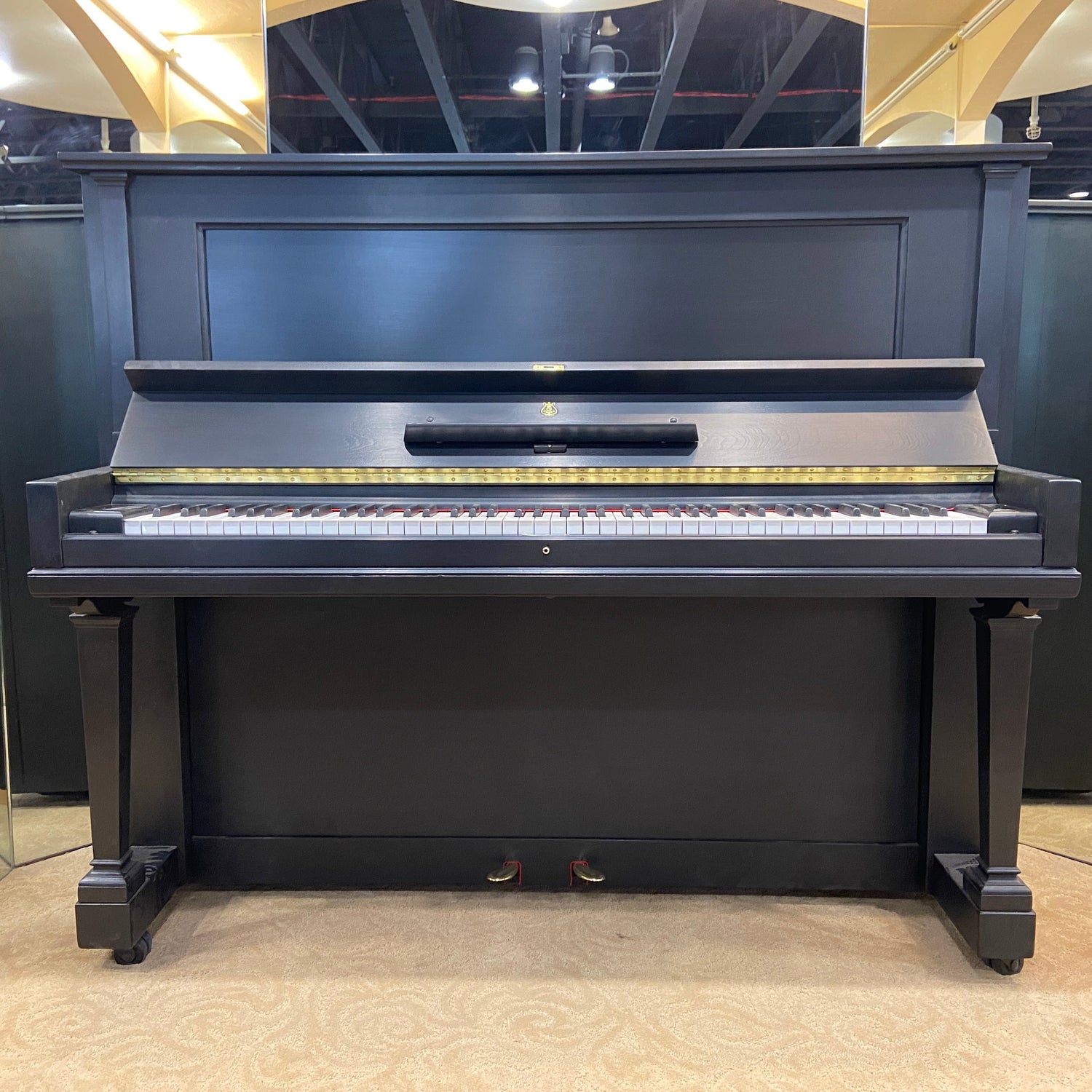
This was an heirloom from Utah, a 1885 Schimmel & Nelson Verti-Grand upright piano, standing an incredible 74" tall. And when you look inside it, you quickly realize this is not a normal upright piano.
This Verti-Grand was built in Minnesota, and only about 11 were ever made. After a fire destroyed most of them, only four are known to exist in the world today—making this piano extraordinarily rare.
Watch the Full "Before & After" Restoration Result
What Is a “Verti-Grand” Piano?
Many upright pianos have been marketed historically as “upright grands.” In most cases, that’s simply marketing language.
Usually it just means a taller upright piano—perhaps 52 to 56 inches—which can produce a fuller sound than a smaller upright.
But this Schimmel & Nelson is something completely different.
This instrument is closer to what I would call a true upright grand.
Why?
Because the plate and string design resemble a grand piano, but rotated vertically.
Instead of the strings being struck near the top like a normal upright, the strike point is down at the bottom of the piano—much more like the geometry of a grand.
That required an entirely different action design.
The action literally swings downward toward the bottom of the instrument so the hammers can strike the strings from below.
From a piano technician’s standpoint, it’s fascinating.
From a service standpoint… it’s a nightmare.

A Technician’s Worst Nightmare?
There are some pianos that are complicated.
Then there’s this one.
On this Verti-Grand:
- The tuning pins are located near the bottom
- The action geometry is completely unconventional
- Even basic service work becomes extremely difficult
Here’s an example.
To access the lower panel so you can tune the piano…
You actually have to remove the legs of the piano just to take the kneeboard off.
Once you get everything open, tuning is still awkward. Instead of standing comfortably at the tuning pins like a normal upright, you’re practically laying on your stomach while tuning the instrument.
It’s one of the most inconvenient designs I’ve ever seen in a piano.
And there’s a reason designs like this didn’t last long in piano history.
Tuning The Verti-Grand (legs have to be removed)!

The Sound Is Surprisingly Big
Despite all the mechanical headaches, the payoff is impressive.
At 74 inches tall, this upright has an enormous soundboard and very long strings.
The result?
It produces a sound that honestly feels closer to a 7-foot grand piano than a traditional upright.
You hear:
- Massive bass response
- Long sustain
- A very powerful tonal presence
From a purely musical standpoint, it’s remarkable.

The Biggest Design Challenge: The First Break
One of the hardest engineering challenges in piano design is something technicians call the first break.
This is the point where the bass strings transition into the tenor and treble strings.
On most modern pianos, manufacturers have spent decades refining the scale design to smooth out this transition.
It took many generations of redesign and iteration for piano builders to get this right.
But with a rare instrument like this Verti-Grand, there wasn’t that opportunity.
It appears this design was produced only briefly, and the manufacturer didn’t have the luxury of refining the scale over multiple generations.
As a result, the break between bass and tenor is not ideal.
That’s one of the trade-offs with experimental piano designs from the late 19th century.
Why We Restore Rare Pianos Like This
When a piano like this comes through the shop, the question naturally comes up:
“Is it worth restoring something this complicated?”
In many cases, the answer depends on two things:
- Sentimental value
- Structural integrity
If a piano has deep family history and the plate, soundboard, and structure are solid, restoring it can bring an incredible instrument back to life.
And sometimes, like in this case, you also get to preserve a fascinating piece of piano design history.
Projects like this are challenging, but they’re also incredibly rewarding.
Before


After


Final Thoughts
This 1885 Schimmel & Nelson Verti-Grand is one of the most unusual instruments we’ve ever rebuilt.
From its grand-style plate orientation to the downward-swinging action and the impossible tuning access, almost everything about it breaks the conventional rules of upright piano design.
And yet, despite all of that…
It produces a huge, powerful sound that reminds you why piano makers were experimenting with bold designs in the first place.
Sometimes the craziest projects turn out to be the most interesting ones.
If you’re curious about restoring a family heirloom piano, or if you want to see more restoration projects like this one, you can learn more about our restoration process here:
View Previous Family Heirloom Piano Restorations
Learn About Piano Restoration
FREE Heirloom Piano Restoration Evaluation
And if you ever have questions about a piano restoration project, feel free to reach out, I’m always happy to help guide people through the process.